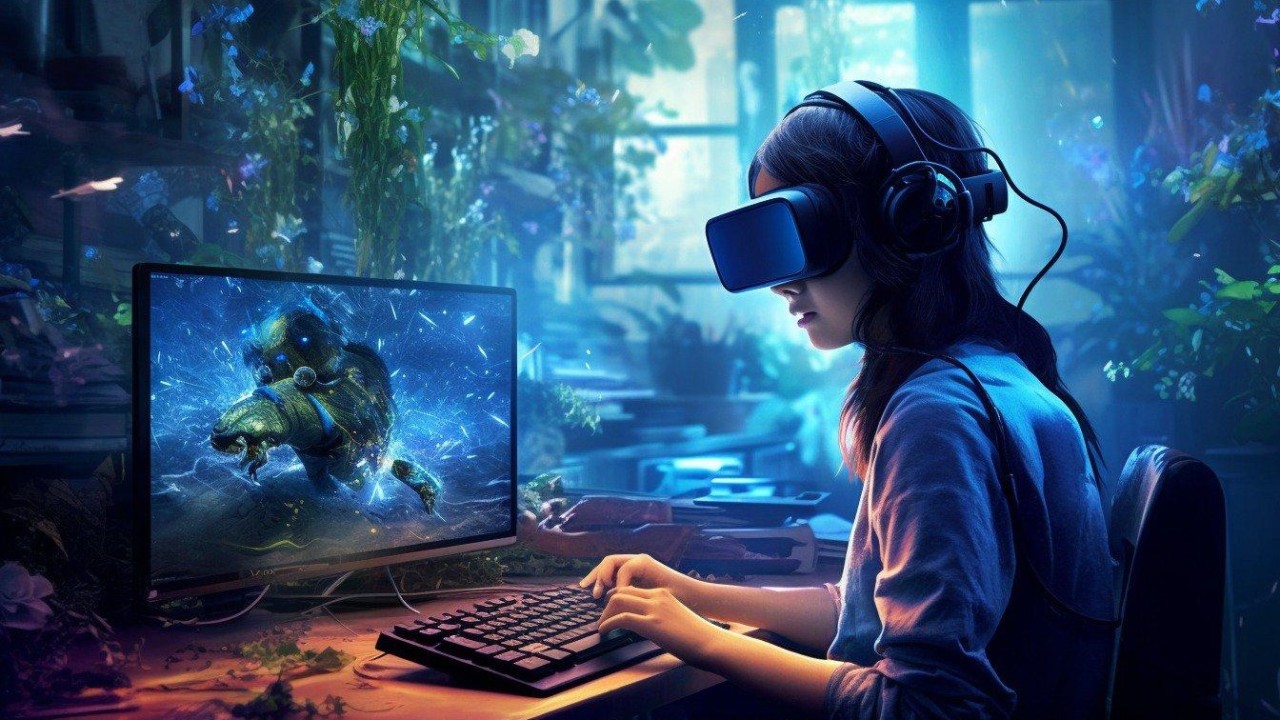
Artificial Intelligence (AI) is no longer just a buzzword in technology; it has become an integral part of many industries, and online hoki123.net is no exception. AI has drastically changed the gaming landscape, improving how games are designed, played, and experienced. From creating smarter in-game characters to enhancing the player experience, AI has a profound influence on the online gaming world. Let’s take a deeper dive into the role AI plays in shaping modern gaming.
1. Smarter NPCs
Non-Player Characters (NPCs) are a staple in almost every video game. In the early days, NPCs followed simple, predictable patterns and behaviors. However, with the advancement of AI, NPCs now have much more complex behaviors and can adapt to a player’s actions, providing a more immersive experience.
AI-powered NPCs are now capable of reacting to different strategies, learning from player behavior, and even making their own decisions. For example, in games like The Last of Us or Halo, enemy NPCs exhibit more realistic behaviors, such as seeking cover when under fire or flanking players to catch them off guard. This level of intelligence brings games to life and provides challenges that require strategy and quick thinking.
Why It Wins:
- Makes NPCs feel more real and dynamic.
- Enhances gameplay by introducing unpredictable elements.
- Elevates the overall gaming experience by adding complexity.
2. Procedural Content Generation
Procedural content generation (PCG) is a technique that uses algorithms to create game content such as levels, maps, and environments. AI-driven PCG allows for infinite worlds and ever-changing landscapes in online games. Games like Minecraft and No Man’s Sky use procedural generation to create vast, dynamic worlds that feel unique every time a player enters them.
With AI, these procedurally generated worlds are not just random; they are intelligently crafted to provide exciting challenges and rewarding gameplay. As a result, players never experience the same game twice, increasing the replay value of many online games.
Why It Wins:
- Generates endless content, ensuring that no two experiences are the same.
- Makes games feel more expansive and dynamic.
- Keeps the gameplay fresh and engaging by continually introducing new elements.
3. AI in Game Testing
Game testing is an essential but time-consuming process in game development. AI has revolutionized this area by automating aspects of the testing process. Machine learning algorithms can analyze gameplay, detect bugs, and identify areas for improvement faster than human testers.
AI-driven testing tools can simulate real player behavior, enabling developers to spot issues that might be missed by traditional testing methods. This speeds up development cycles and ensures a smoother final product, leading to better gaming experiences for players.
Why It Wins:
- Reduces the time and cost of game testing.
- Improves the quality of the final product by identifying bugs and issues early.
- Enhances the overall gaming experience with fewer glitches and smoother gameplay.
4. Personalized Gameplay
AI is also playing a significant role in personalizing the gaming experience for players. By analyzing player behavior and preferences, AI can adapt the game environment, storylines, and challenges to suit each player’s unique style. This is particularly noticeable in games that have strong RPG or story-driven elements.
For instance, AI can adjust the difficulty level based on how well a player is performing, ensuring that the game remains challenging without becoming frustrating. Games like The Witcher 3 and Skyrim adapt their quests and story arcs based on the player’s decisions, allowing for a more tailored and engaging narrative.
Why It Wins:
- Provides a custom gaming experience that feels more personal.
- Keeps players engaged by adjusting difficulty and challenges.
- Enhances storytelling by adapting narratives to player choices.
5. AI in Multiplayer Matchmaking
Matchmaking is a critical component of any multiplayer online game. AI is used to create more balanced and competitive matches by analyzing players’ skills, playstyles, and behaviors. For example, in games like Overwatch or Fortnite, AI-driven matchmaking algorithms ensure that players are matched with others of similar skill levels, reducing frustration and ensuring a more enjoyable experience.
AI also helps detect and prevent cheating by analyzing players’ behavior for patterns that indicate unfair advantages, such as aimbots or wallhacks. This helps maintain the integrity of online multiplayer games and provides a fairer playing field for all players.
Why It Wins:
- Improves the overall multiplayer experience by creating balanced matches.
- Reduces frustration by ensuring that players face opponents of similar skill levels.
- Enhances fairness by detecting and preventing cheating.
6. Voice and Facial Recognition
Voice and facial recognition technology powered by AI is making its way into online gaming, offering new ways for players to interact with games. Voice recognition systems can allow players to control aspects of the game or chat with other players, enhancing immersion and accessibility. Games like Star Wars Jedi: Fallen Order use voice commands for certain game actions, offering a hands-free way to control gameplay.
Facial recognition is also being explored as a way to personalize the gaming experience even further. For example, AI can read players’ facial expressions to detect emotions and adapt the game’s atmosphere accordingly. This technology is still in its early stages, but it has the potential to revolutionize how we interact with games in the future.
Why It Wins:
- Makes gameplay more immersive and accessible through voice commands.
- Potentially tailors the game experience to player emotions.
- Adds a new layer of interaction beyond traditional controllers.
7. AI and Storytelling
AI’s role in storytelling is perhaps one of its most exciting developments in online gaming. Traditionally, video game narratives have been scripted, with predetermined dialogues and events. However, AI is enabling more dynamic, player-driven narratives where the story adapts based on choices and actions in real-time.
Games like Detroit: Become Human and Red Dead Redemption 2 are already using AI to create branching narratives that respond to the player’s decisions. The more sophisticated AI becomes, the more it will be able to create complex, adaptive storylines that give players a unique experience every time they play.
Why It Wins:
- AI-driven narratives make each playthrough feel fresh and engaging.
- Responds to player choices, offering more impactful decisions.
- Creates immersive, dynamic stories that react to gameplay.
8. Enhancing AI Opponents
One of the most significant ways AI has influenced online slot depo 1000 is in the creation of smarter, more capable opponents. Gone are the days of predictable enemy behavior. AI-powered enemies now adjust their strategies based on player actions, making them far more challenging and engaging.
For example, in Call of Duty and Far Cry, enemies use tactics such as flanking and setting traps, responding to the player’s movements and actions. This makes solo gameplay more intense and rewarding, as players must continuously adapt their strategies to succeed.
Why It Wins:
- AI-powered enemies create a more challenging and rewarding gaming experience.
- Enhances solo gaming by providing smart, adaptive opposition.
- Encourages strategic thinking and quick decision-making.
Conclusion: AI’s Future in Gaming
The integration of Artificial Intelligence in online gaming has undoubtedly transformed how we play and experience games. From smarter NPCs to personalized gameplay, AI is pushing the boundaries of what’s possible in the gaming world. As technology continues to evolve, AI will only become more sophisticated, offering even greater levels of immersion, challenge, and interactivity.
For both developers and players, AI represents an exciting frontier in the gaming industry. As AI continues to shape everything from game design to multiplayer matchmaking, it’s clear that the future of gaming will be heavily influenced by this powerful technology. Whether it’s creating more lifelike characters or enabling new forms of storytelling, AI is poised to continue revolutionizing the way we game.